Gran Turismo 7’s Most Reliable Credit Grind
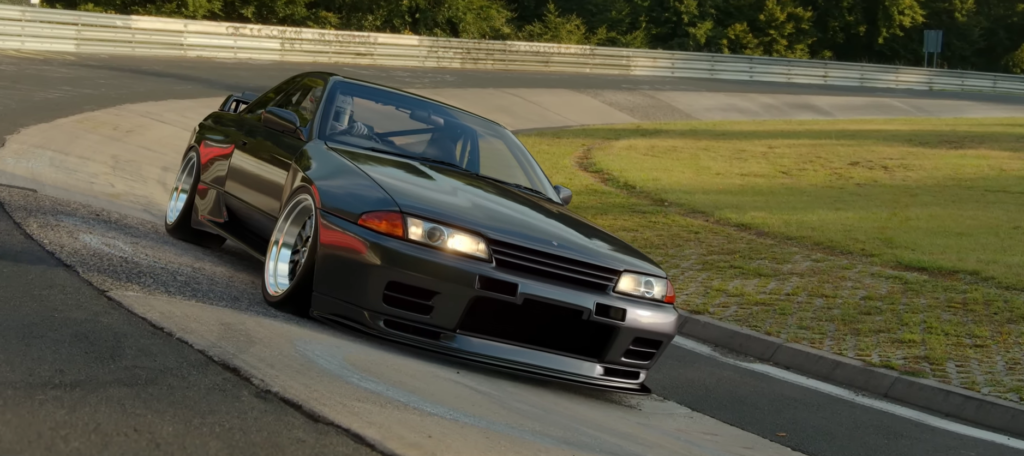
Despite ongoing physics tweaks and Performance Points adjustments in Gran Turismo 7, the meta for credit grinding has remained remarkably stable. The modified Nissan R32 GT-R continues to be the community’s go-to build for the Tokyo Expressway 600 PP race, capable of generating up to 2.25 million credits per hour with a completion time hovering just under 22 minutes per run.
A Stable Meta in a Game That Keeps Shifting
Gran Turismo 7 receives periodic updates that adjust vehicle physics and the game’s Performance Points system — changes that have historically disrupted established credit farming strategies overnight. In the most recent period, however, no major update has invalidated the current approach, leaving the Tokyo Expressway 600 PP race as the most consistently rewarding option for players looking to build their in-game finances.
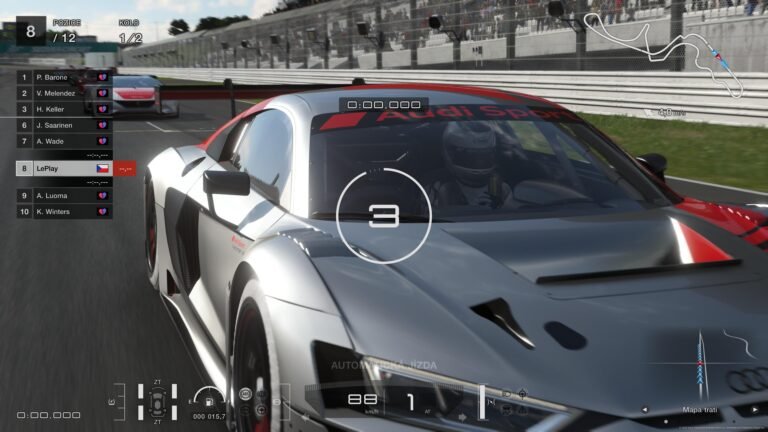
The Audi R8 remains a viable alternative and is technically faster around the circuit, but it demands precise control and a manual transmission setup, raising the barrier to entry considerably. The 1994 Nissan Skyline GT-R V-Spec R32, by contrast, offers a more forgiving balance of pace and stability — a combination that has made it the preferred choice for the broader community.
The Engine Swap That Makes It Work
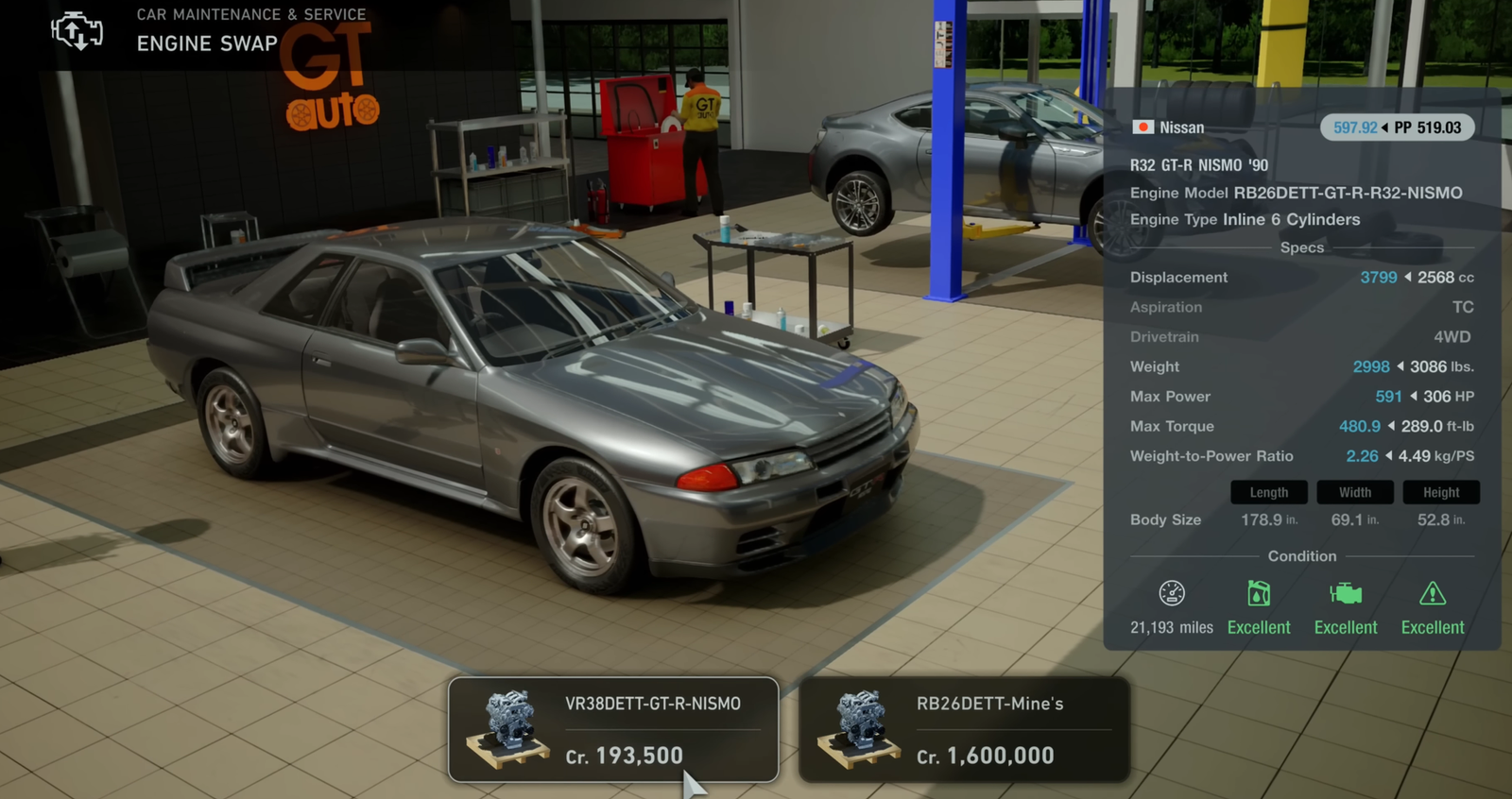
The cornerstone of the R32 build is a motor transplant: specifically, fitting the engine from the Nissan R92CP into the GT-R chassis. This is a significant upfront investment, but one that pays for itself quickly given the credit returns from repeated Tokyo 600 runs.
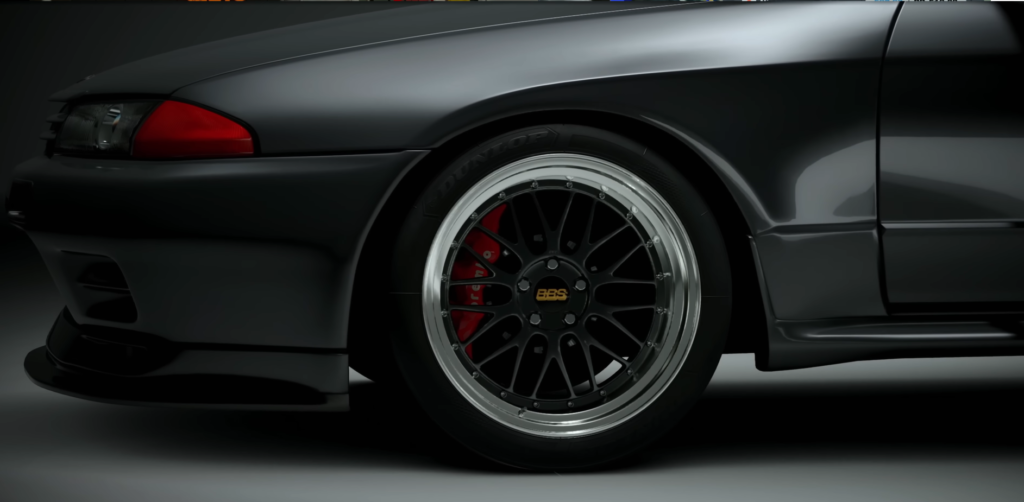
Equally important is what players are advised not to do. Adding a widebody kit to the R32 is discouraged, as the aerodynamic modifications push the car’s PP count upward and can disqualify it from the 600 PP event limit. Keeping the stock wheels is another key detail — aftermarket rims tend to add PP in ways that are easy to overlook. The recommended tire combination of Comfort Hard at the front and Sports Hard at the rear further helps manage the PP ceiling while maintaining enough grip to run a clean, competitive race.
No Pit Stops, No Complications
One of the most attractive elements of this strategy is its operational simplicity. The fuel map is set to level 2 at the start of the race, and the entire run is completed without a single pit stop. At that fuel setting, the R32 has enough in the tank to go the distance, removing one of the more common variables that can derail an otherwise clean run.
Optimal lap times bring the total race duration in at approximately 21 minutes and 58 seconds. A completed run yields around 825,000 credits, a figure that includes the clean race bonus — a meaningful addition that rewards contact-free driving and track limit compliance.
Why the Clean Race Bonus Is Non-Negotiable
The clean race bonus is not a minor supplement to the payout; it is a central part of what makes this method economically viable. Losing it due to avoidable contact or track limit violations cuts into the per-run return significantly enough to affect the overall hourly rate.
There are a few specific areas where players can run into trouble. The opening phase of the race presents the highest contact risk, as the AI field is closely bunched and positions are being sorted. Getting through that section without incident is the first priority. The final corner on the circuit has track limits that are actively penalized if exceeded, making corner entry discipline important late in the lap. Additionally, certain barriers around the course carry a distinct texture that signals a harsher penalty than a standard wall — players familiar with the track learn to identify these spots and give them a wider margin.
Consistency Over Raw Speed
The R32 build is not the absolute fastest way to complete the Tokyo 600. The Audi R8 can turn quicker lap times when driven with precision. What the Nissan offers instead is a higher floor: fewer moments where a lapse in concentration results in a penalty, a spin, or a lost bonus. For players who are running the event repeatedly over an extended session, that reliability translates directly into a more predictable credit-per-hour rate.
That tradeoff — sacrificing peak speed for reduced cognitive load and lower risk — is why the community has largely settled on the R32 as the standard recommendation. It is one of the least demanding builds to maintain over long grinding sessions, which matters when the goal is to accumulate millions of credits across multiple hours of play.
The Bigger Picture
For players working toward Gran Turismo 7’s most expensive vehicles, establishing a reliable grinding routine is a practical necessity. The game’s top-tier cars carry price tags that require sustained, methodical credit accumulation, and the Tokyo Expressway 600 remains one of the most efficient routes to building that capital. As long as a future update does not significantly alter the R32’s PP count or the race’s payout structure, this particular combination of car and event is likely to remain the community standard for competitive credit farming.